Mandarin Vocabulary Resources
Mandarin vocabulary materials shared by the Parlora community. Filter by format below or open the full library.
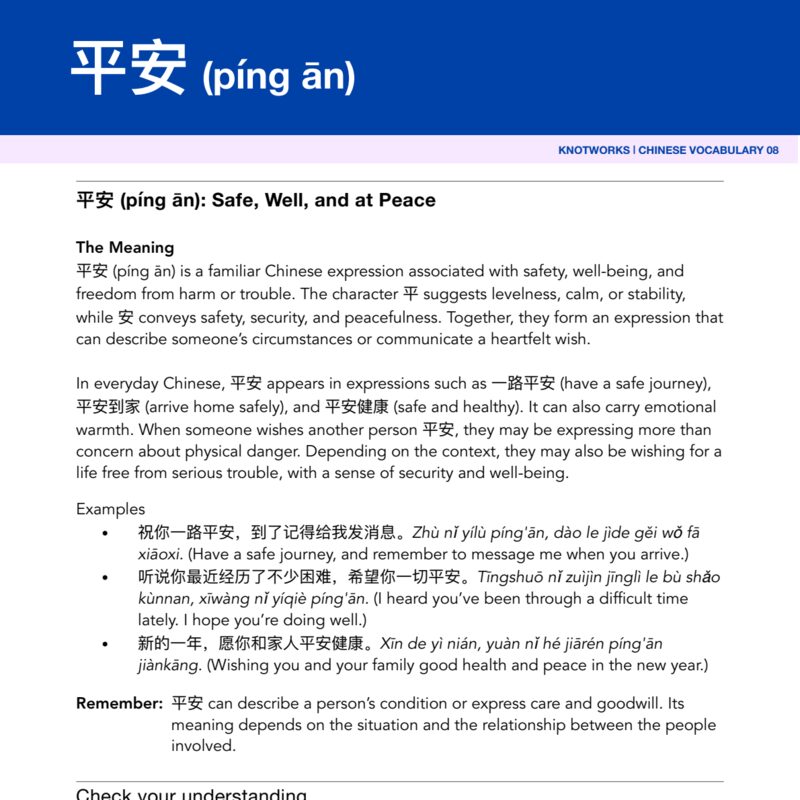
Understanding 平安 (píng ān): Safe, Well, and at Peace
A vocabulary worksheet explaining the nuances, everyday usage, and cultural context of the Chinese expression 平安 (píng ān), featuring contextual examples, practical exercises, and answer explanations.
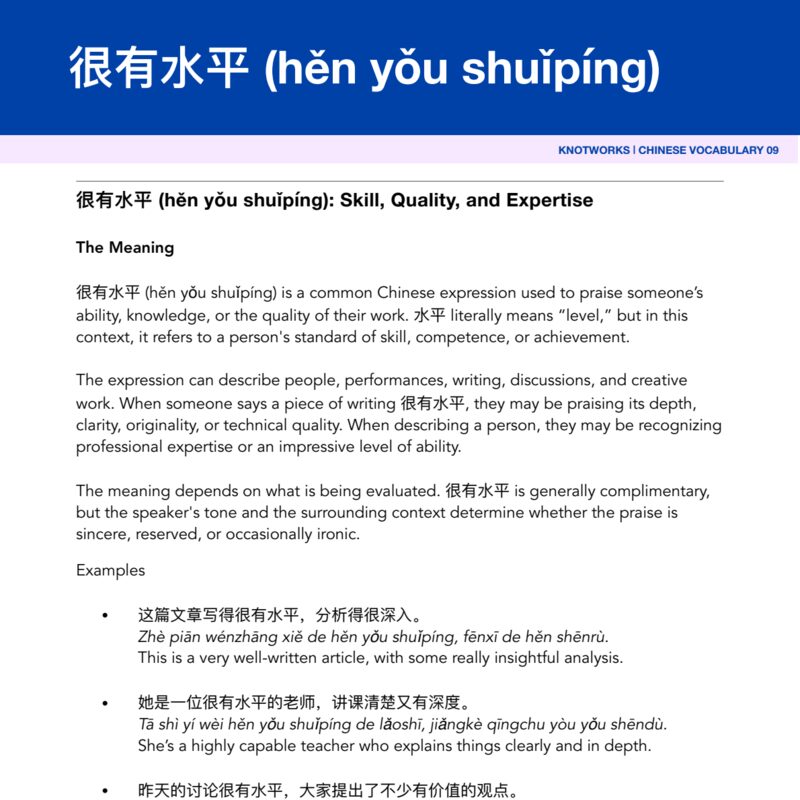
很有水平 (hěn yǒu shuǐpíng): Skill, Quality, and Expertise
Explains the Chinese expression 很有水平 (hěn yǒu shuǐpíng), used to compliment someone's ability, knowledge, or high standard of work, accompanied by examples, comprehension exercises, and answer explanations.
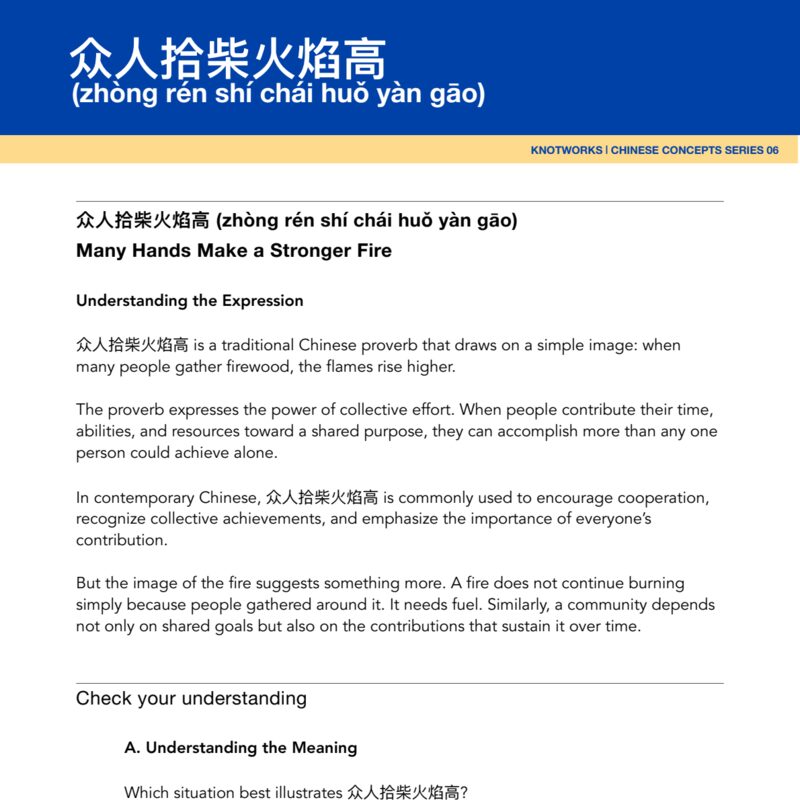
众人拾柴火焰高: Many Hands Make a Stronger Fire
An instructional worksheet exploring the traditional Chinese proverb 众人拾柴火焰高 (zhòng rén shí chái huǒ yàn gāo), including its meaning of collective effort, practice questions, cross-linguistic comparisons, and authentic real-world usage.
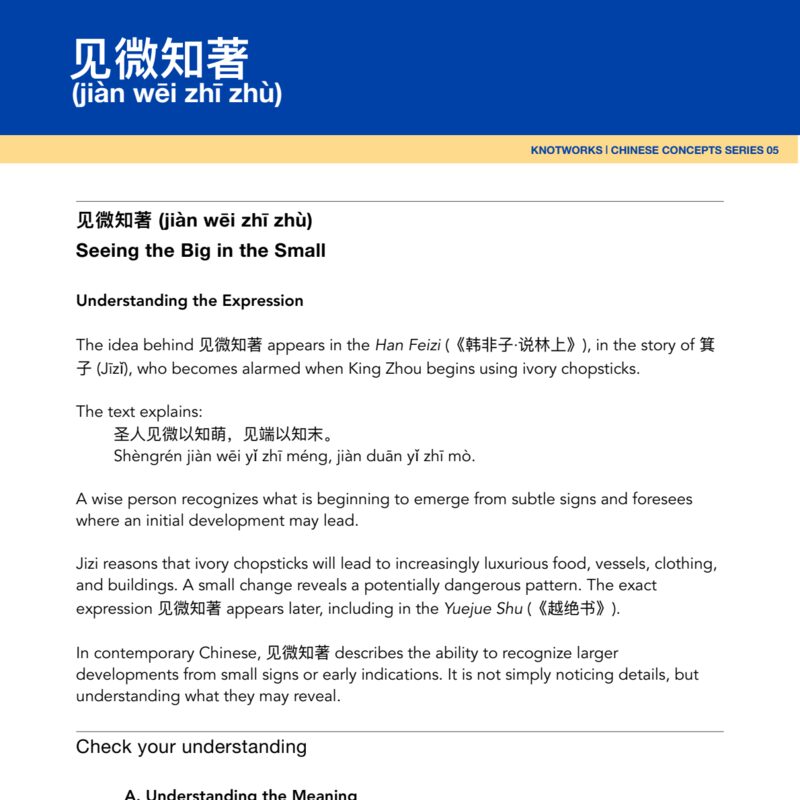
见微知著 (Jiàn Wēi Zhī Zhù): Seeing the Big in the Small
An exploration of the classical Chinese idiom 见微知著 (jiàn wēi zhī zhù), detailing its historical origins in the Han Feizi, modern usage, comparative language analysis, and real-world literary applications.
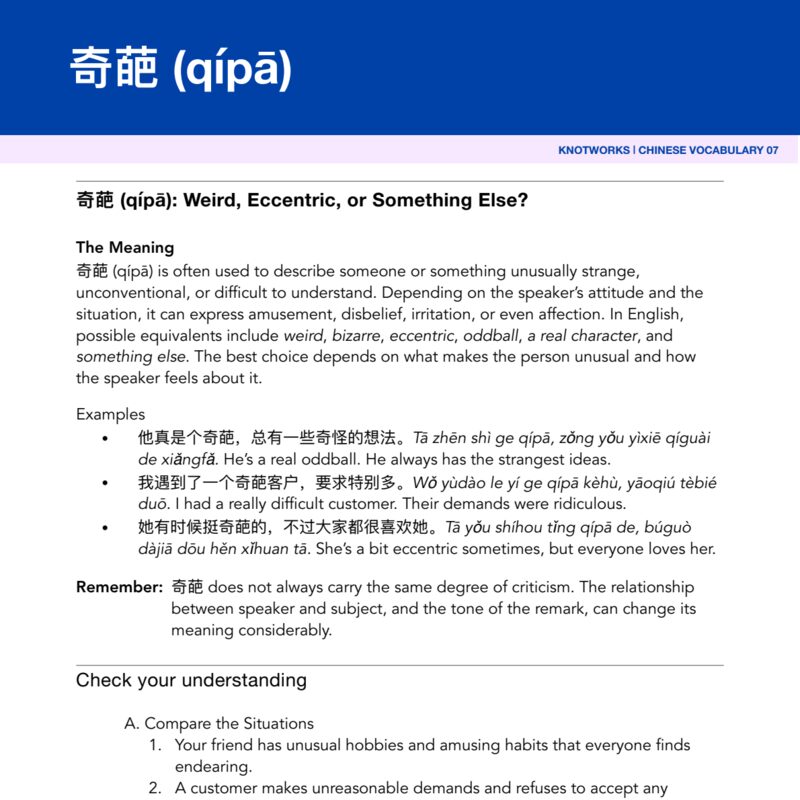
Understanding 奇葩 (qípā): Weird, Eccentric, or Something Else?
A vocabulary worksheet explaining the nuances, connotations, and English translation equivalents of the modern Chinese slang word 奇葩 (qípā), complete with practice questions and answer keys.
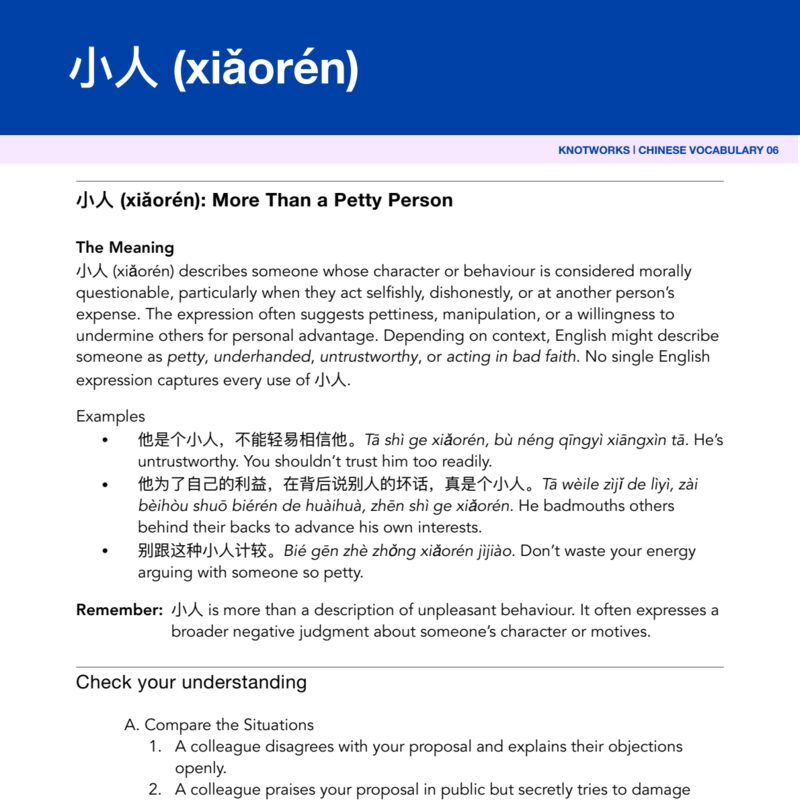
Understanding Chinese Vocabulary: 小人 (xiǎorén)
An in-depth vocabulary guide exploring the cultural and situational nuances of the Chinese word 小人 (xiǎorén), from underhanded behavior to moral judgment.
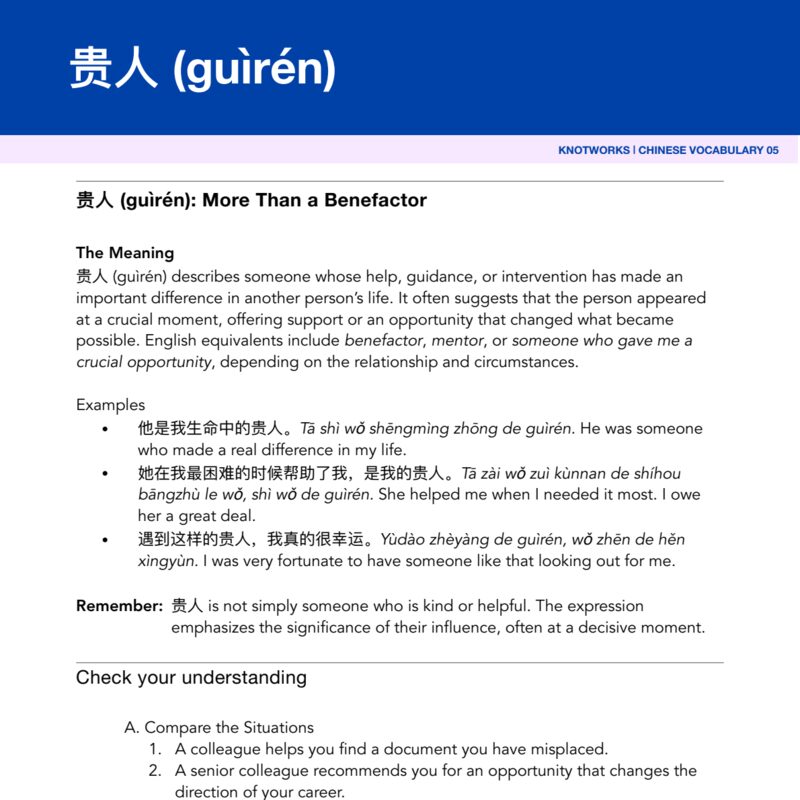
Understanding 贵人 (guìrén): More Than a Benefactor
Explores the nuanced meaning, usage, and English translations of the Chinese term 贵人 (guìrén), which refers to a person whose crucial help or guidance significantly influences one's life. Includes context comparison exercises and an answer key.
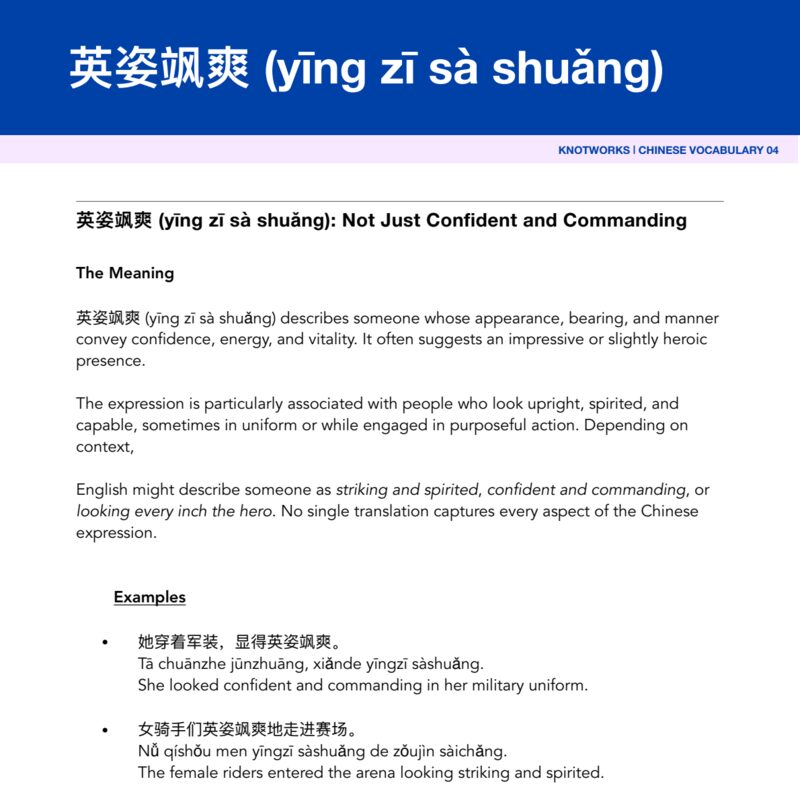
Chinese Idiom Study: 英姿飒爽 (yīng zī sà shuǎng)
An in-depth exploration of the Chinese idiom 英姿飒爽 (yīng zī sà shuǎng), detailing its nuanced meaning of heroic bearing, vigor, and vitality through contextual examples and translation comparisons.
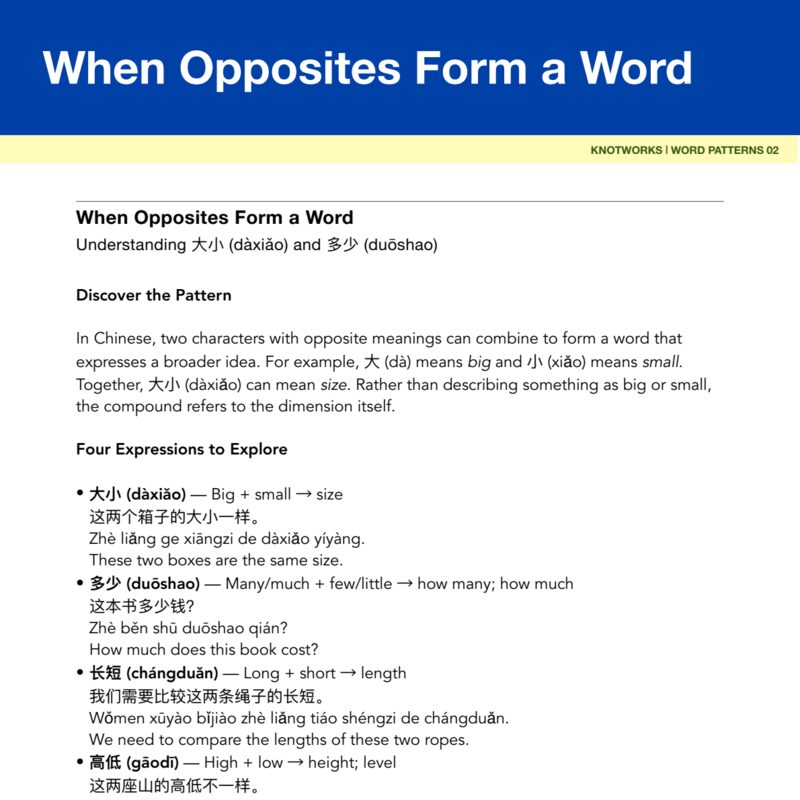
When Opposites Form a Word: Antonym Compounds in Chinese
This worksheet introduces Chinese antonym compounds like 大小, 多少, 长短, and 高低, demonstrating how pairing opposite characters creates a word describing a broader dimension or quantity. It includes example sentences, matching exercises, fill-in-the-blank practice, and detailed explanations.
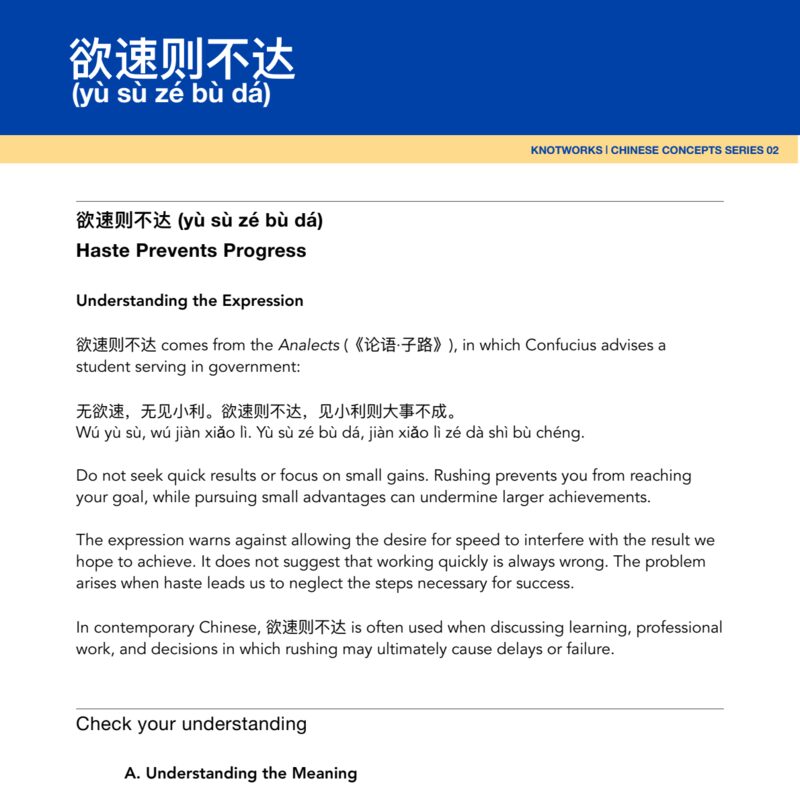
Chinese Concepts: 欲速则不达 (Haste Prevents Progress)
An exploration of the classical Chinese idiom 欲速则不达 (yù sù zé bù dá) from the Analects of Confucius, examining its meaning, modern usage, and contrast with English proverbs through contextual exercises.
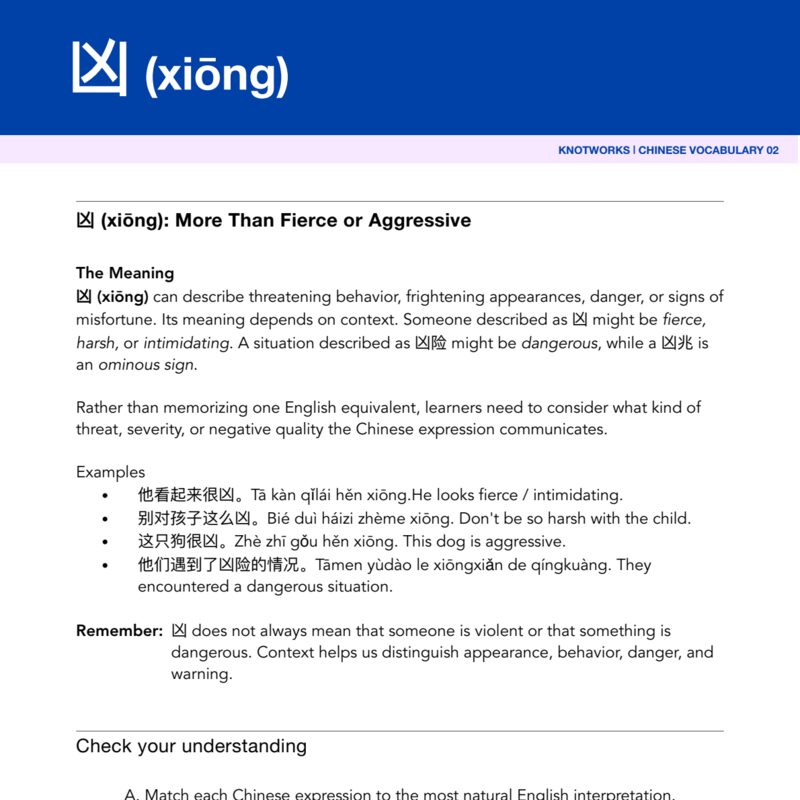
Chinese Vocabulary: Understanding 凶 (xiōng) Beyond 'Fierce'
An instructional worksheet exploring the nuanced meanings and usage of the Chinese character 凶 (xiōng), covering contexts from intimidating behavior to ominous signs, along with practice exercises.
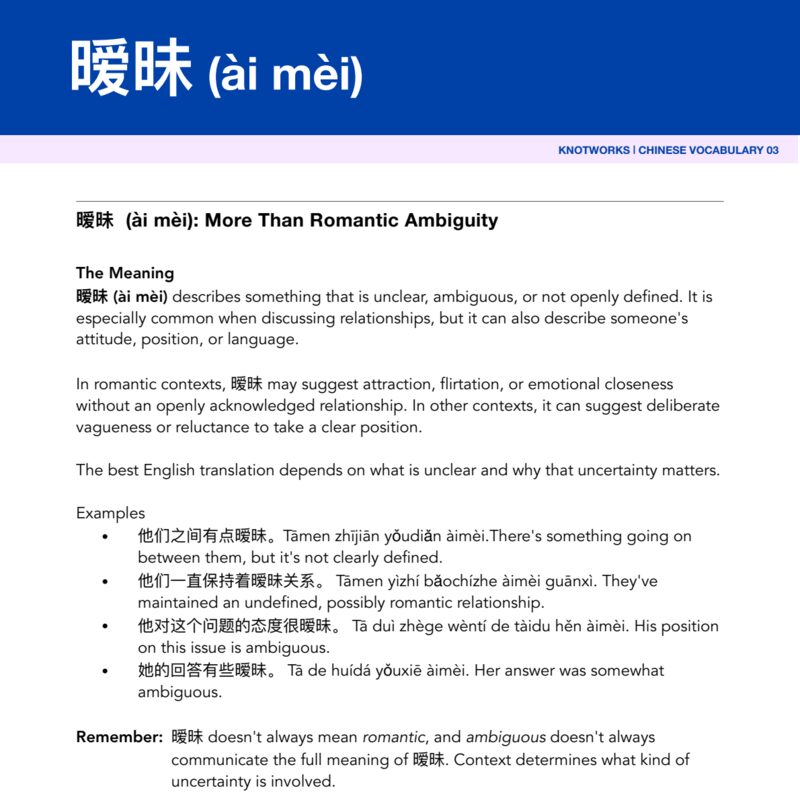
Chinese Vocabulary: Understanding 暧昧 (ài mèi) Beyond Romantic Ambiguity
A vocabulary study guide exploring the nuances of the Chinese word 暧昧 (ài mèi), covering its romantic, interpersonal, and formal usages with practice questions and answer explanations.
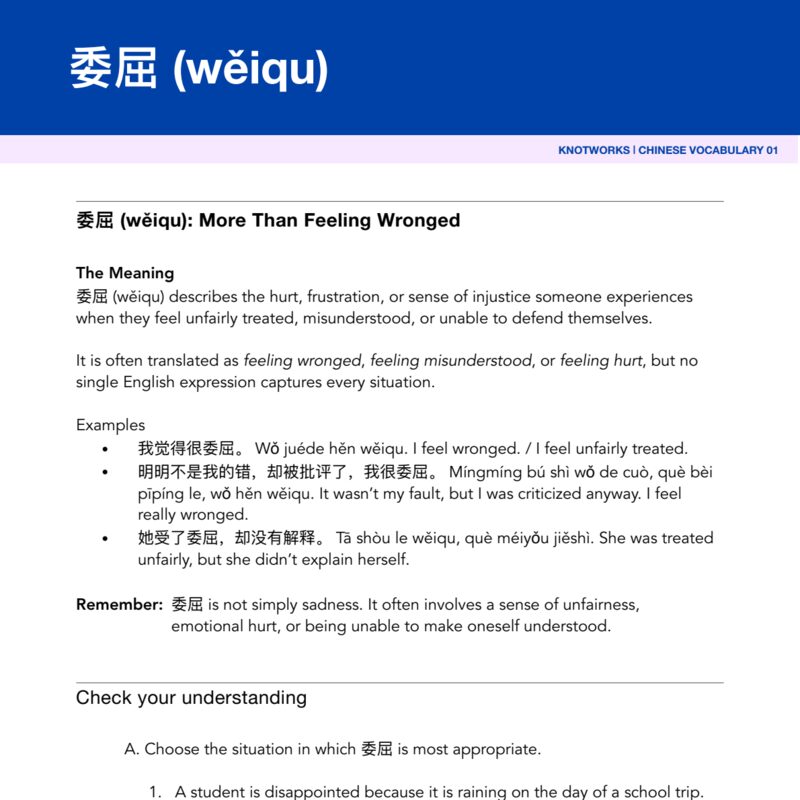
Understanding the Nuance of 委屈 (wěiqu)
This document explores the Chinese word 委屈 (wěiqu), explaining its meaning as more than just feeling wronged, but encompassing hurt, frustration, and a sense of injustice. It provides examples, contextual usage, and exercises to deepen understanding.
5 Untranslatable Words about Human Connection (Book 1)
This mini-ebook explores five Chinese words related to human connection—缘分, 亲情, 默契, 孝顺, and 幸福—often considered 'untranslatable' into English. It delves into their cultural nuances, origins, and how they shape understanding of relationships and responsibilities, emphasizing that linguistic differences are not barriers but invitations to deeper cultural insight.
Why 骂人 Has No Single English Equivalent: Language, Culture, and Power
This document explores why the Chinese word '骂人' lacks a single English equivalent, illustrating how different languages organize and express human behaviors like emotional outbursts, verbal attacks, and corrective speech based on context, relationship, and cultural norms. It provides a framework for understanding and translating such culturally embedded terms by focusing on the underlying situation rather than seeking direct word-for-word translation.
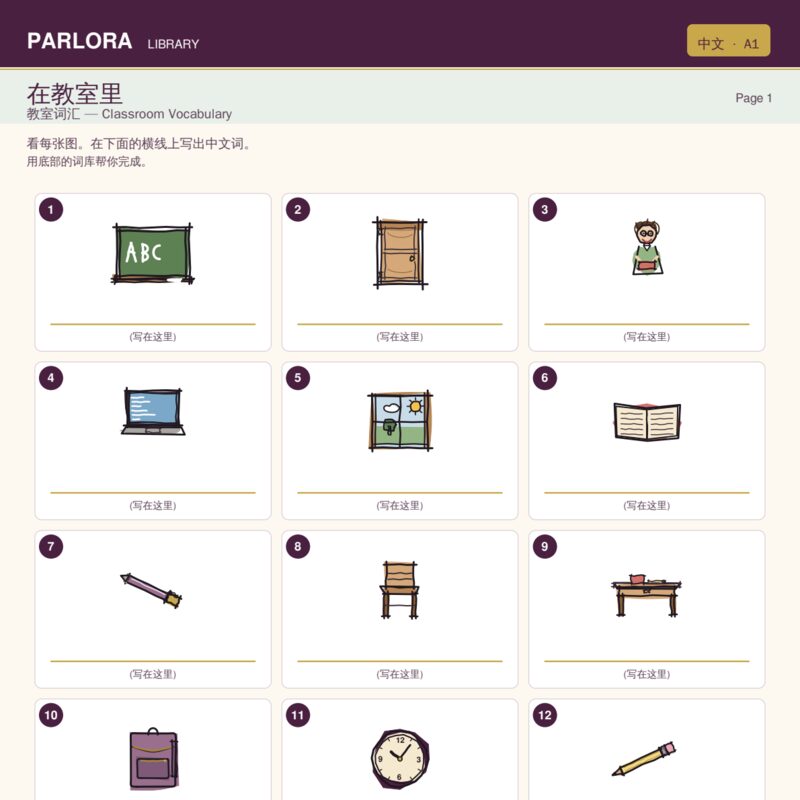
Classroom Vocabulary (Mandarin A1)
This document introduces basic classroom vocabulary in Mandarin Chinese for absolute beginners, presenting 12 items with accompanying images for matching exercises and providing additional practice activities and common classroom phrases.
Get more Mandarin resources
Sign up free to download, favorite and share materials — or upload your own.
Sign up free