Japanese Learning Resources
Everything in the Parlora Library tagged Japanese. Browse by category or format, or open the full library to filter further.
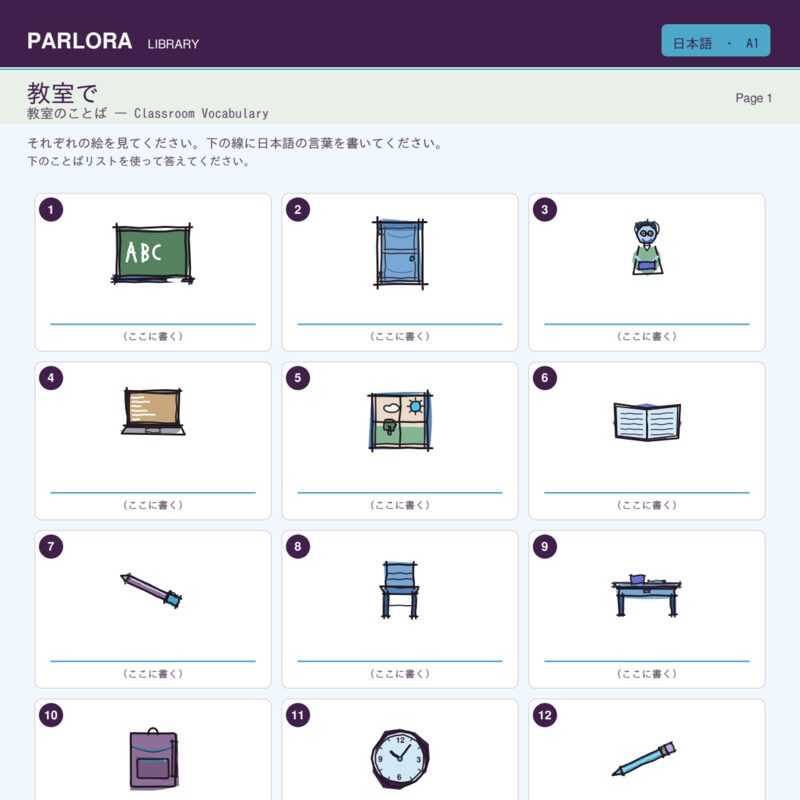
Classroom Vocabulary in Japanese (A1)
This document introduces common classroom vocabulary in Japanese through image matching exercises and provides a key for self-correction. It also suggests additional practice activities and useful classroom phrases.
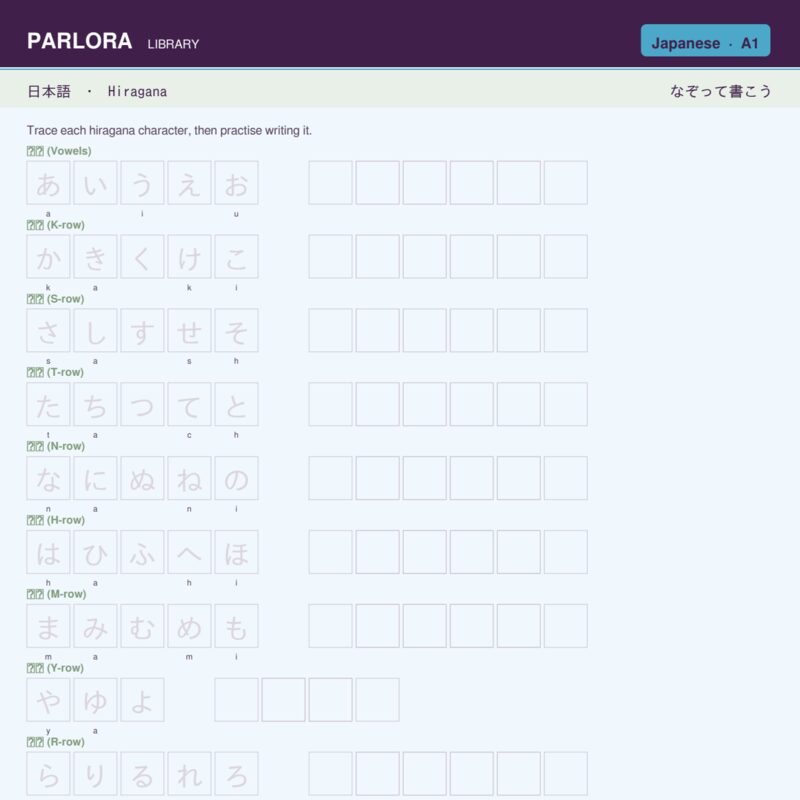
Hiragana Practice Worksheets
This document provides tracing and writing practice for all hiragana characters, followed by a fill-in-the-blank chart to complete the hiragana table.
Japanese Particle Practice (A2/JLPT N4)
This document provides a particle guide and a 20-sentence practice exercise for common Japanese particles (は, が, を, に, で, と). It is suitable for A2/JLPT N4 level learners.
JLPT N2 Practice Exam: Language Knowledge & Reading
This document provides a sample practice test for the Japanese Language Proficiency Test (JLPT) N2 level, covering vocabulary, grammar, and reading comprehension. It includes a key with explanations in Japanese.
JLPT N1 Sample Practice Test (Language Knowledge & Reading)
This document provides a sample practice test for the Japanese Language Proficiency Test (JLPT) N1 level, covering vocabulary, grammar, and reading comprehension sections. It includes questions based on the official JLPT format with an answer key and brief explanations.
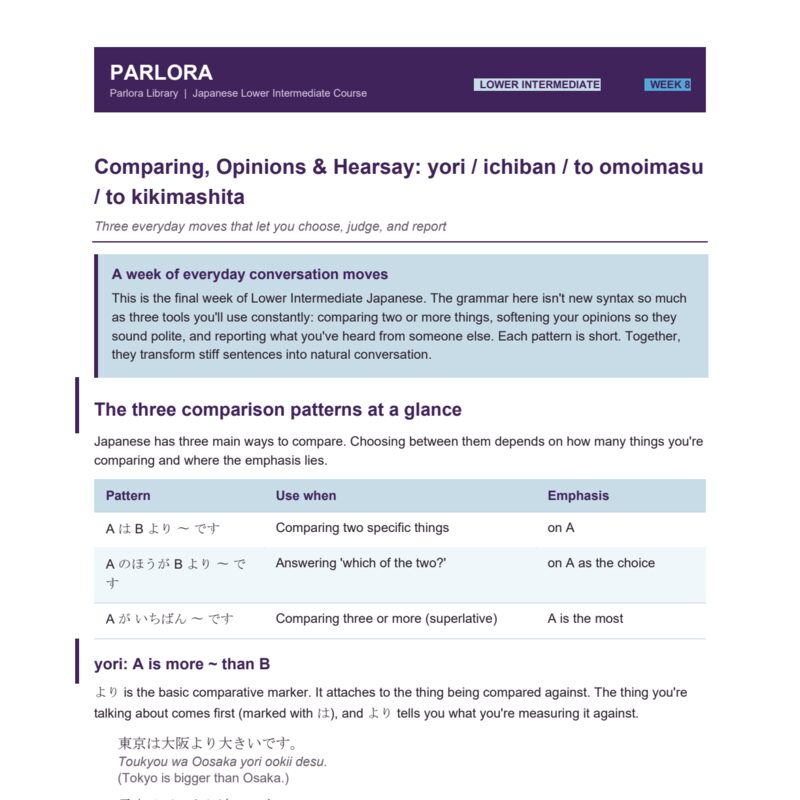
Comparing, Opinions & Hearsay: yori / ichiban / to omoimasu / to kikimashita
This document introduces three key Japanese grammar patterns for making comparisons, expressing opinions politely, and reporting hearsay, serving as the final week's content for a lower intermediate course while also including a cumulative mini-test.
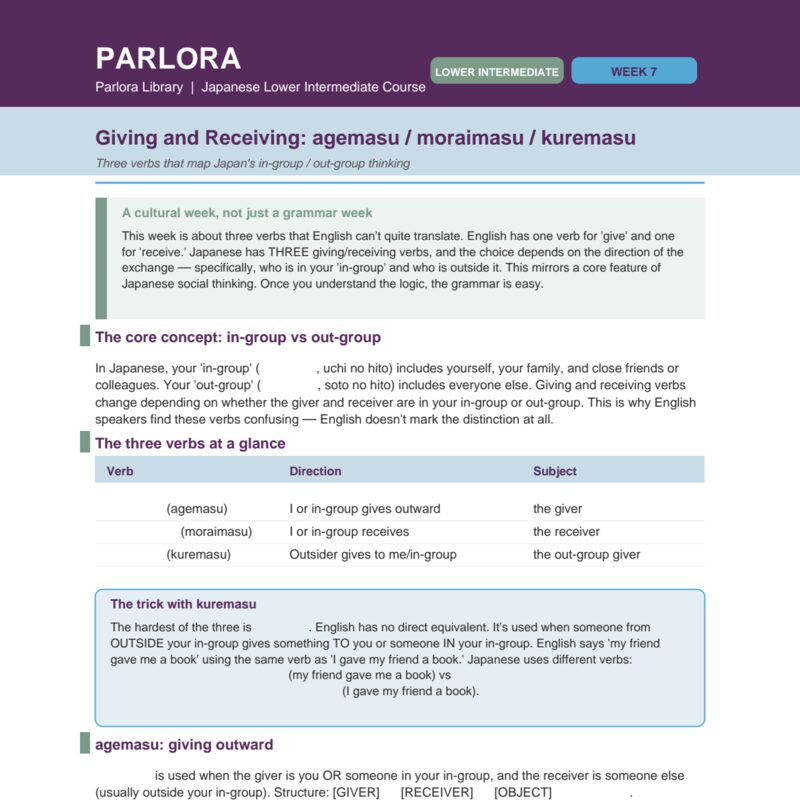
Giving and Receiving: agemasu / moraimasu / kuremasu
This document explores the Japanese verbs for giving and receiving (agemasu, moraimasu, kuremasu), emphasizing their use based on in-group/out-group distinctions, and includes exercises to practice their application.
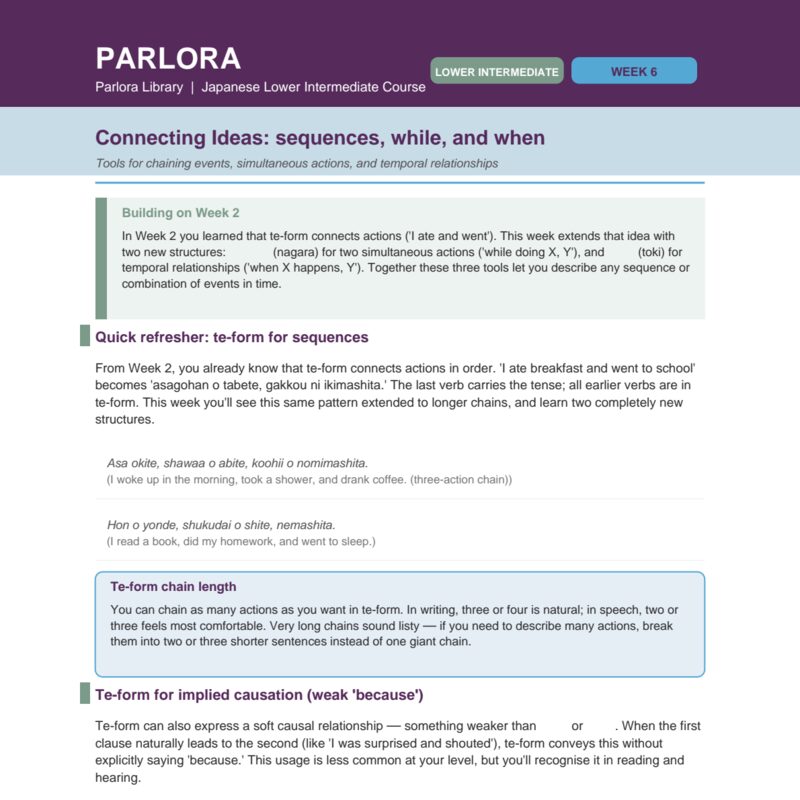
Connecting Ideas: Sequences, While, and When
This document introduces lower-intermediate Japanese grammar for connecting ideas, focusing on using te-form for sequences and implied causation, the -nagara form for simultaneous actions, and the toki form for temporal relationships ('when'). It includes examples and exercises.
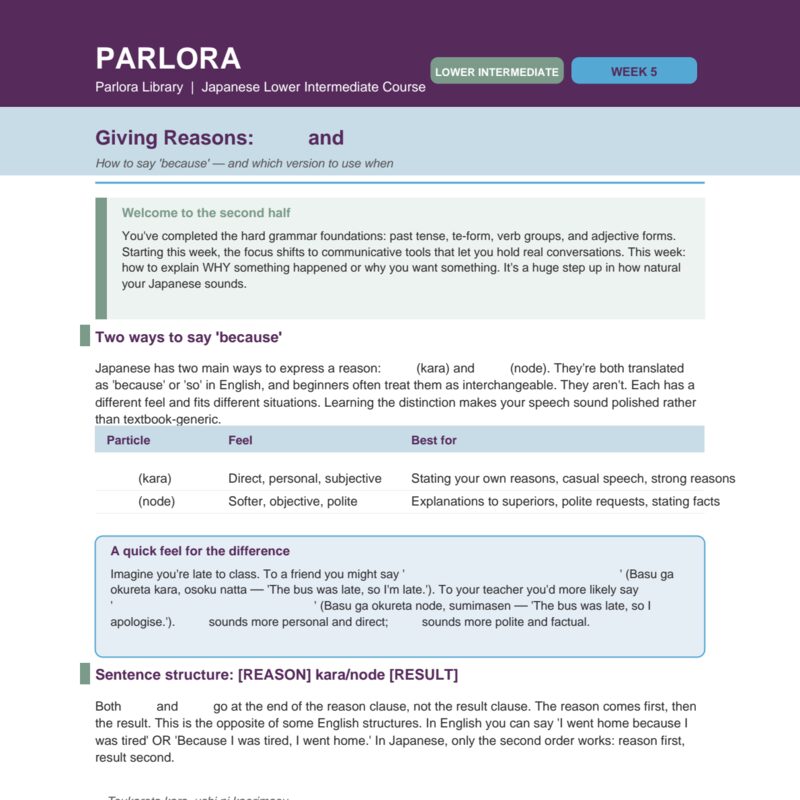
Giving Reasons: から and ので
This document explains the usage and differences between 'kara' (から) and 'node' (ので) in Japanese, both meaning 'because' or 'so'. It provides grammatical rules, practical guidelines for appropriate use, and exercises to solidify understanding.
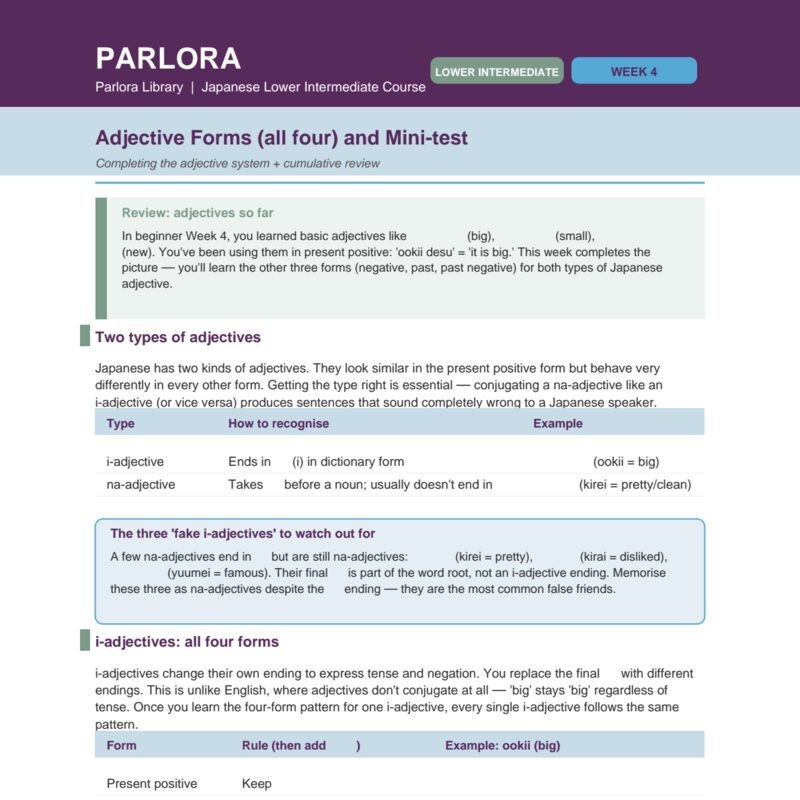
Adjective Forms (All Four) and Mini-Test (Weeks 1-4)
This document introduces the four forms of i-adjectives and na-adjectives in Japanese, explains how to link two adjectives, and includes a cumulative mini-test covering topics from Weeks 1-4. It also provides a list of common i-adjectives and na-adjectives for practice.
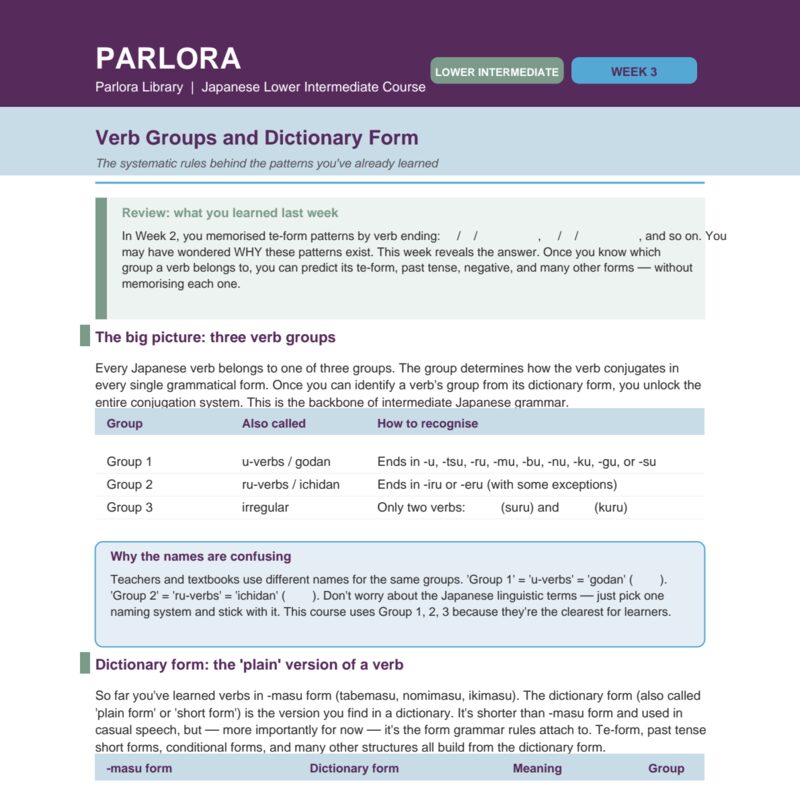
Verb Groups and Dictionary Form in Japanese
This document explains the three verb groups in Japanese (Group 1, 2, and 3) and how to identify a verb's group from its dictionary form. It also covers exceptions and the relationship between dictionary form and -masu form, with exercises for practice.
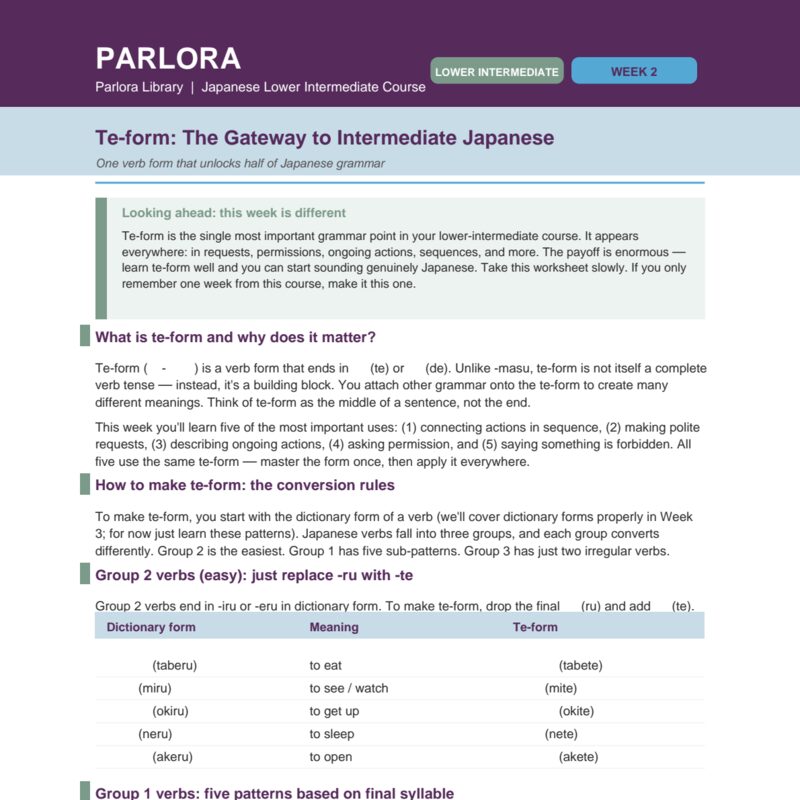
Te-form: The Gateway to Intermediate Japanese
This document introduces the Japanese 'te-form' verb conjugation, explaining its formation rules (for all three verb groups) and its five essential functions, including connecting actions, making requests, describing ongoing actions, asking permission, and forbidding actions. It also provides examples and exercises.
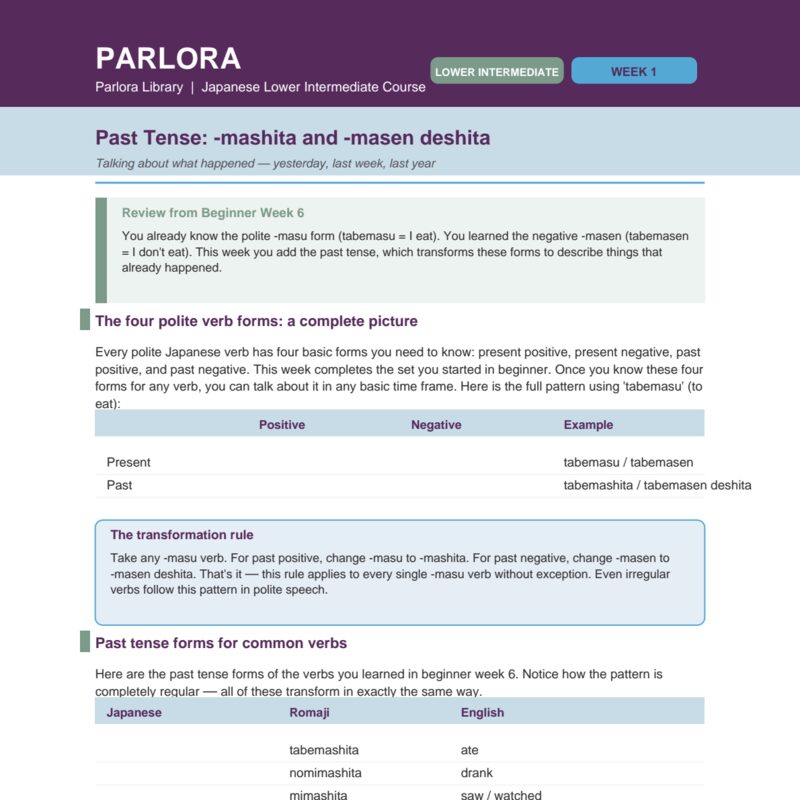
Past Tense: -mashita and -masen deshita
This document introduces and explains the use of -mashita and -masen deshita to form past tense in polite Japanese verbs, including common time expressions and examples with nouns and adjectives. It also includes exercises for practice.
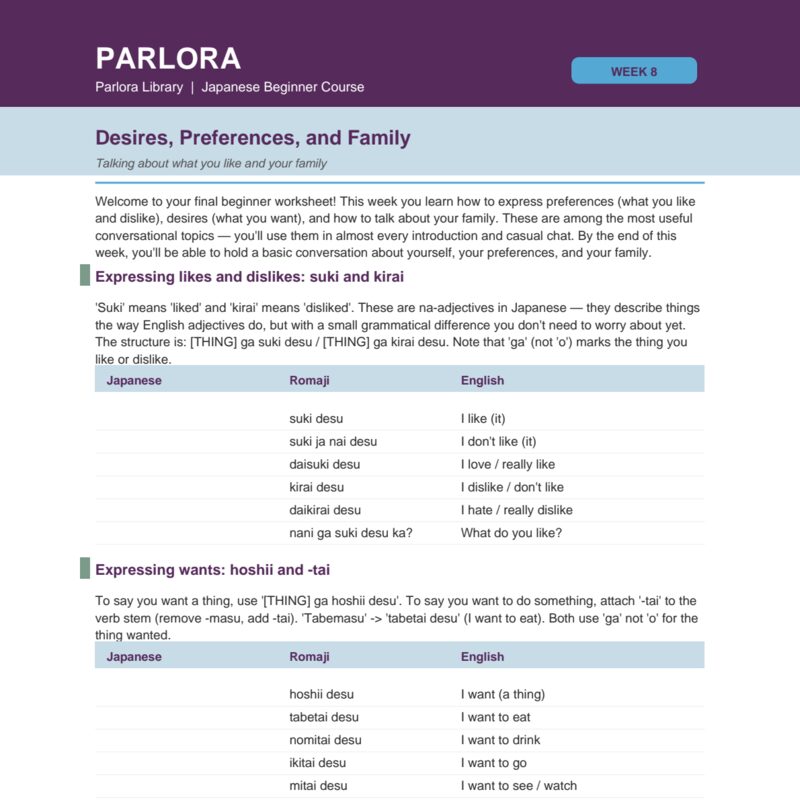
Desires, Preferences, and Family
This document teaches beginner Japanese speakers how to express likes, dislikes, and desires using 'suki', 'kirai', 'hoshii', and the '-tai' form, and introduces essential family vocabulary with explanations of humble and honorific forms.
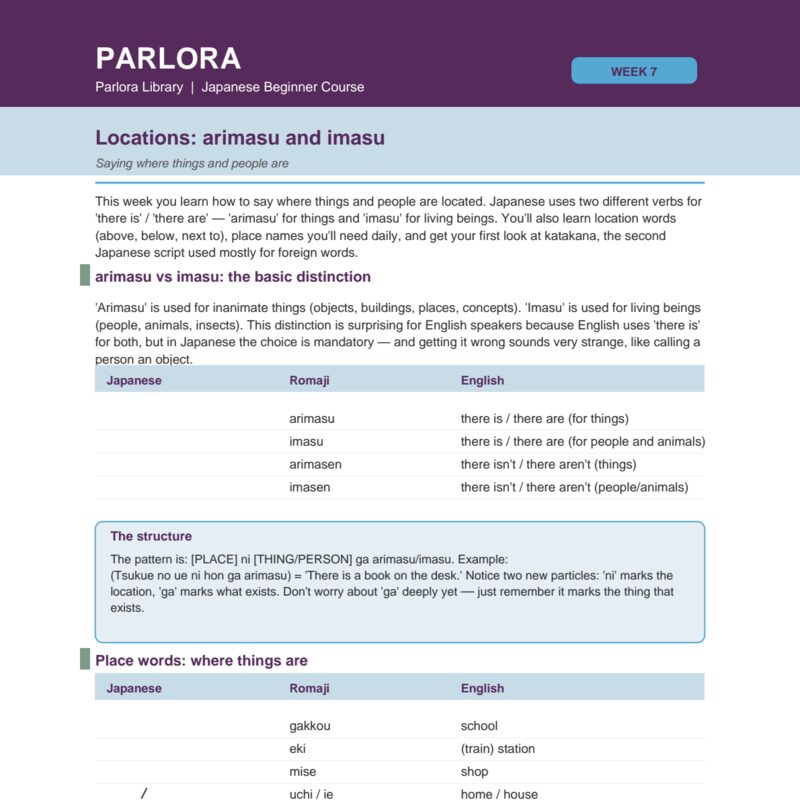
Locations: arimasu and imasu
This document introduces the Japanese verbs 'arimasu' and 'imasu' for expressing existence and location, explains their usage with living and non-living things, and presents common location words and an introduction to the Katakana script.
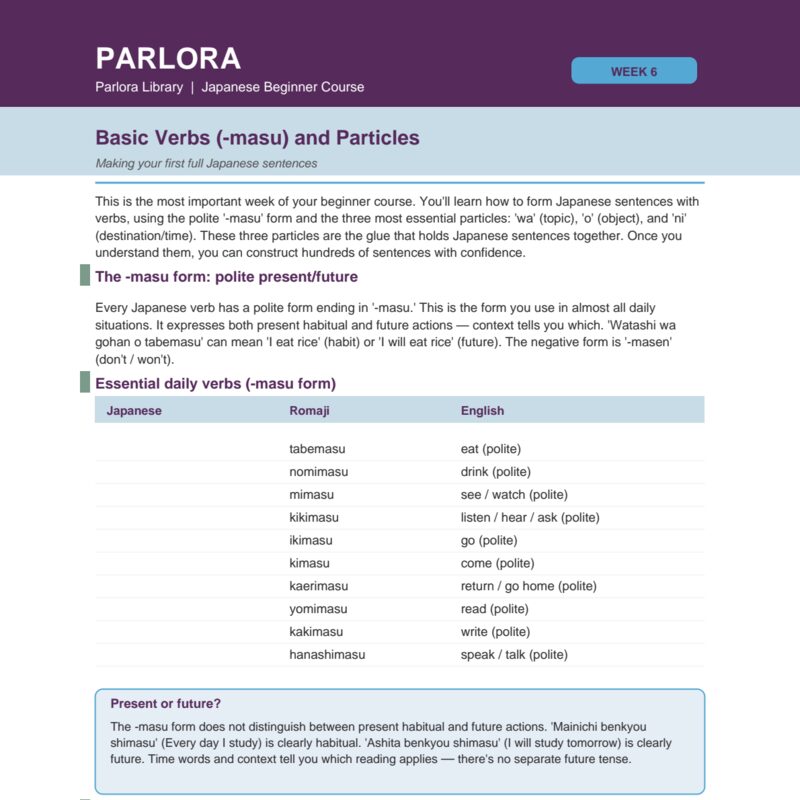
Basic Japanese Verbs (-masu) and Particles (Wa, O, Ni)
This document introduces fundamental Japanese sentences using the polite '-masu' verb form and the essential particles 'wa', 'o', and 'ni'. It covers common daily verbs, forming negative sentences, asking questions, and provides exercises with an answer key.
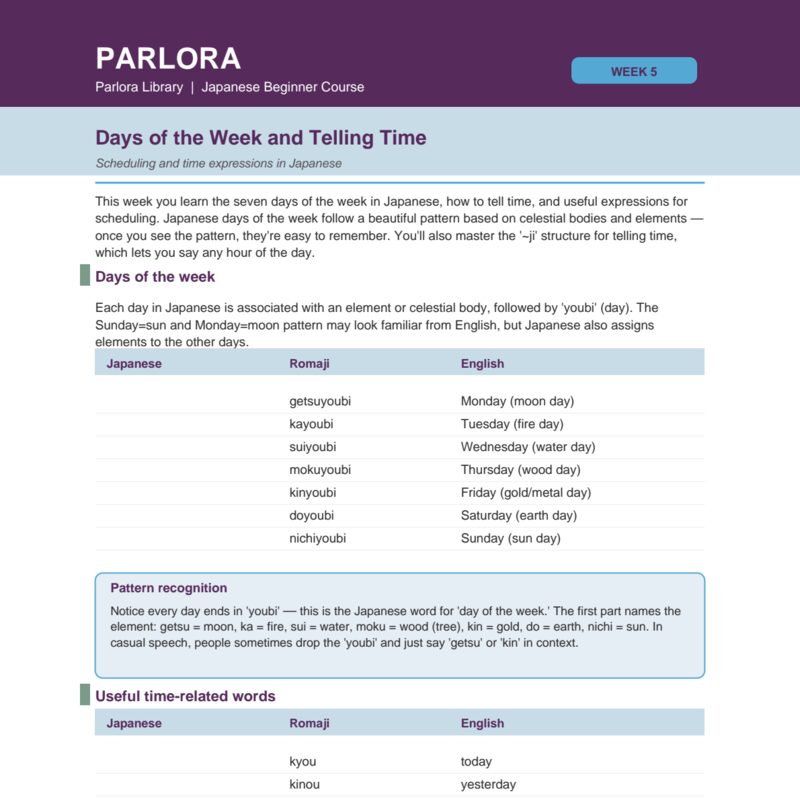
Days of the Week and Telling Time in Japanese
This document introduces the days of the week and how to tell time in Japanese, including useful time-related vocabulary and simple dialogues for scheduling.
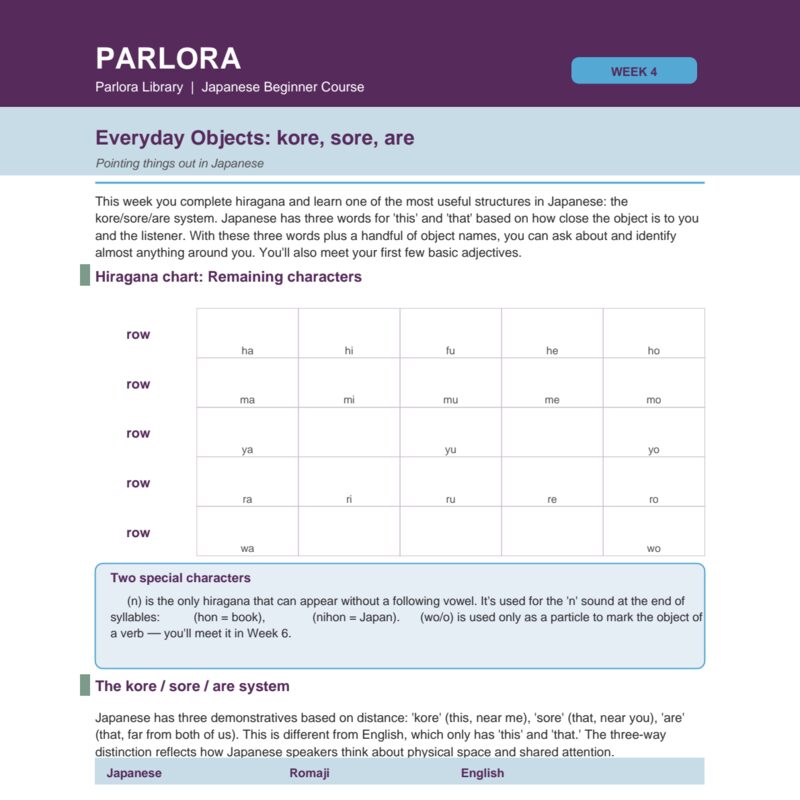
Everyday Objects: kore, sore, are
This document introduces the Japanese demonstratives 'kore', 'sore', and 'are' for pointing out objects based on distance, along with basic vocabulary for everyday items and adjectives. It also covers remaining hiragana characters and special characters.
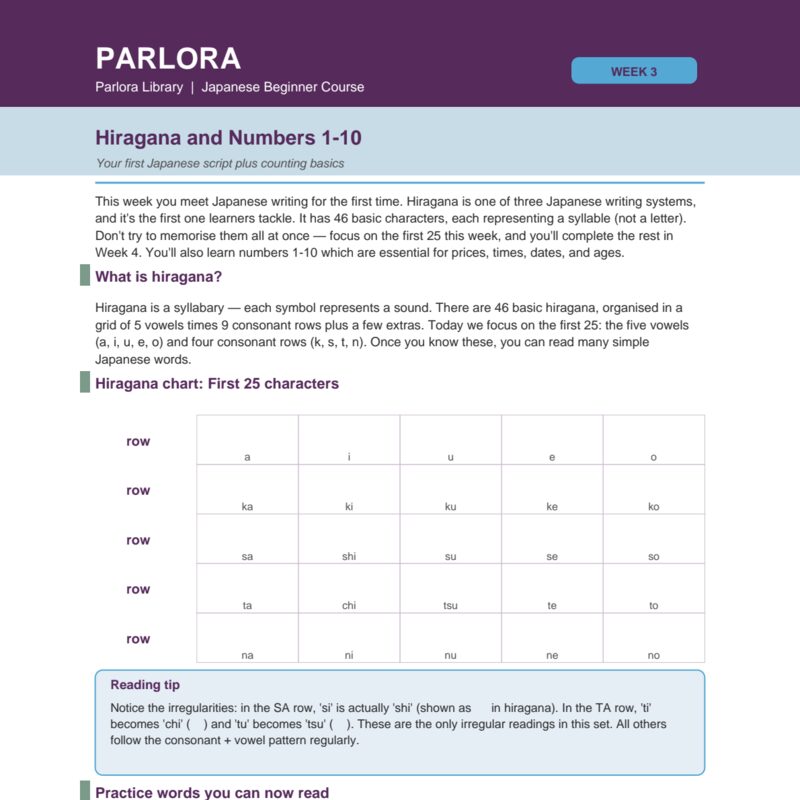
Hiragana and Numbers 1-10
This document introduces the first 25 Hiragana characters and Japanese numbers 1-10, explaining their sounds and providing practice exercises for reading and writing them. It covers key vocabulary words and includes a reading tip for irregular Hiragana pronunciations.
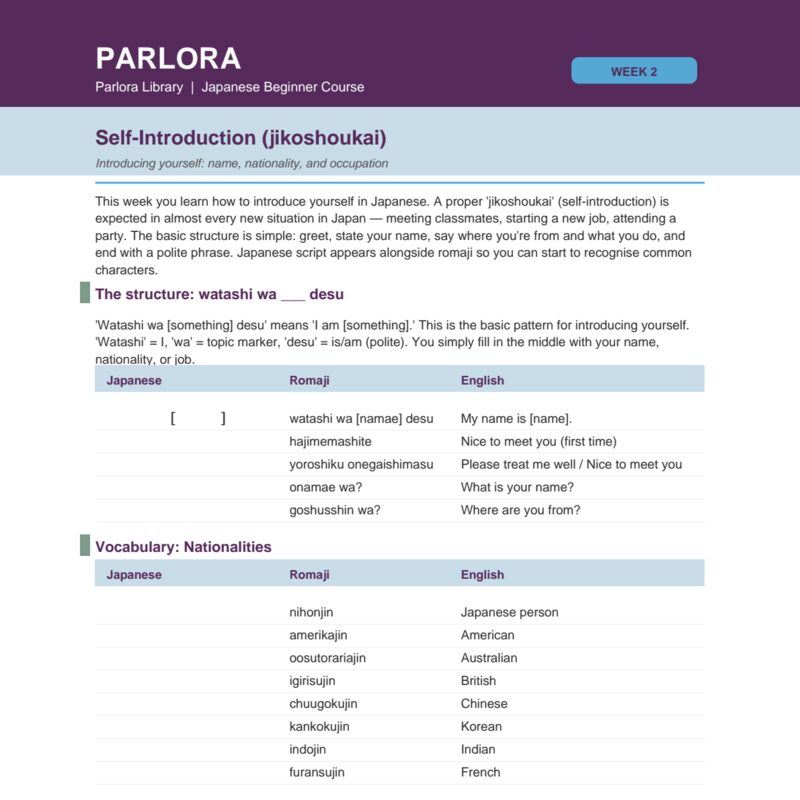
Self-Introduction (Jikoshoukai) - Japanese Beginner Course (Week 2)
This document introduces beginners to self-introductions in Japanese, covering basic sentence structure, greetings, nationalities, and occupations, with accompanying exercises.
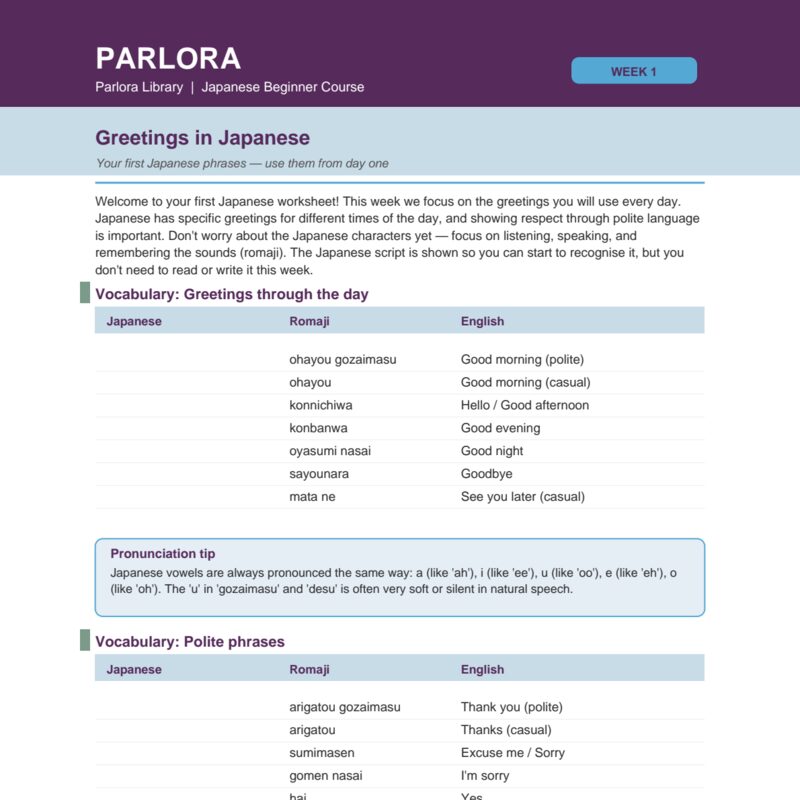
Japanese Greetings and Polite Phrases - Week 1 Worksheet
This document introduces fundamental Japanese greetings for different times of the day and common polite phrases, along with pronunciation tips and practice exercises.
Get more Japanese resources
Sign up free to download, favorite and share materials — or upload your own.
Sign up free